Global Fighter Aircraft by Country: A Comparative Overview
The development and deployment of fighter aircraft by country is a complex and continuously evolving field, with nations around the world investing heavily in these sophisticated machines to bolster their air defense capabilities. From fifth-generation stealth fighters to advanced multi-role aircraft, the array of fighter jets in service today is more diverse than ever, reflecting the unique strategic priorities and technological capabilities of their respective countries. As the global security landscape continues to shift, understanding the comparative strengths and weaknesses of fighter aircraft by country is crucial for researchers and policymakers alike.
Context and History
The history of fighter aircraft is deeply intertwined with the history of military aviation itself, with the first fighter planes emerging during World War I. Over the decades, these aircraft have evolved significantly, with advances in materials, engine technology, and electronics leading to substantial improvements in performance, maneuverability, and firepower. Today, fighter aircraft are indispensable components of modern air forces, serving a variety of roles including air-to-air combat, ground attack, and reconnaissance. The diversity of fighter aircraft by country reflects not only differences in military doctrine and strategic priorities but also variations in industrial capability, economic resources, and geopolitical relationships.
Current Capabilities and Trends
The current landscape of fighter aircraft by country is marked by a mix of established players and newcomers, with some nations leveraging advanced technologies to develop cutting-edge fighters. The United States, for example, has been at the forefront of fighter jet technology, with its F-35 Lightning II representing a significant leap forward in terms of stealth capabilities, avionics, and multi-role functionality. Other countries, such as China and Russia, are also investing heavily in the development of fifth-generation fighters, aiming to challenge the dominance of Western aircraft. Meanwhile, regional powers like India and Japan are bolstering their air forces with a combination of indigenous development and foreign procurement, seeking to enhance their defensive posture in increasingly contested skies.
Comparative Strengths and Challenges
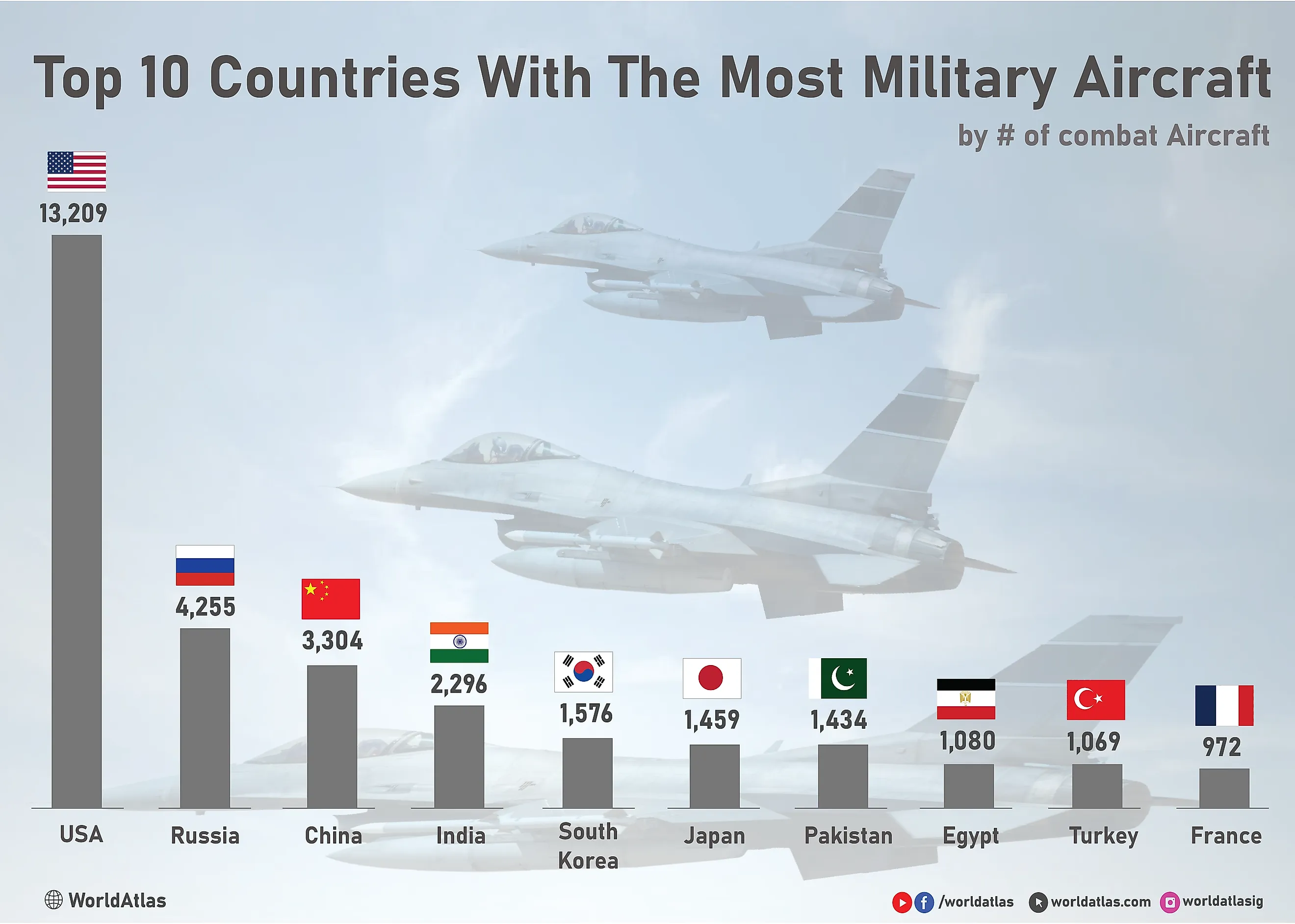
Assessing the comparative strengths and weaknesses of fighter aircraft by country is a nuanced task, given the variety of factors at play. These include not only the technical specifications of the aircraft themselves but also the training and experience of their pilots, the robustness of supporting logistics and maintenance systems, and the integration of fighter jets within broader military strategies. Some countries excel in certain areas, such as the advanced radar and electronic warfare capabilities of certain Western fighters, while others may prioritize attributes like cost-effectiveness, ease of maintenance, or simplicity of operation. The image below highlights the top countries in terms of active combat aircraft strength, offering a glimpse into the global distribution of military airpower.

Implications and Future Directions
The ongoing development and deployment of fighter aircraft by country have significant implications for global security and the balance of power among nations. As new technologies emerge, such as unmanned aerial vehicles (UAVs) and hypersonic missiles, the traditional role of manned fighter aircraft is likely to evolve, with potential shifts towards more autonomous systems and network-centric warfare. Furthermore, the increasing importance of cybersecurity and electronic warfare capabilities in modern air combat underscores the need for a holistic approach to air force modernization, one that encompasses not just the aircraft themselves but also the underlying infrastructure, training practices, and operational doctrines. As researchers and policymakers navigate this complex landscape, a deep understanding of fighter aircraft by country will remain essential for making informed decisions about defense priorities and strategic investments.
Best Fighter Jet In The World Which Country

Best Fighter Jet in the World Which Country
Best Fighter Jet In The World Which Country

Best Fighter Jet in the World Which Country
Fighter Jet Charts Military Charts/Maps/Data
Fighter Jet Charts Military Charts/Maps/Data